Laihau Village, the gateway to Lewa Tidahu Sub-district in East Nusa Tenggara, is not only known for its flat and hilly landscapes and vast rice fields. Behind its scenic charm, the village is beginning to take steps forward in public health, particularly through the transformation of Posyandu services.
With a population of 2,875 spread across four hamlets and one development village, Laihau Village has four active Posyandu. However, providing Posyandu services is not easy, especially for the cadres who have been working behind the scenes all this time.
“In the past, we only used a small piece of paper with names, weights, and heights written on it. Sometimes it got lost, and sometimes the writing was incorrect. It made things very difficult,” said Ibu Martina Radja, one of the cadres who has served for many years.
From Five Tables to the Life-Cycle Approach
Previously, the Posyandu in Laihau used the classic “five-table” system, which divided the service process into several stages. However, the limited number of cadres and their lack of mastery of each stage often became an obstacle.
A major change came when the government introduced the concept of the IPHC-based Posyandu, built on a life-cycle approach—a new model in which services are provided not only for infants and pregnant women, but also for adolescents, adults, and the elderly.
“At first, I was confused. How could we possibly serve all age groups at the same time? But after attending the training from CD Bethesda YAKKUM, everything started to make sense,” recalled Martina
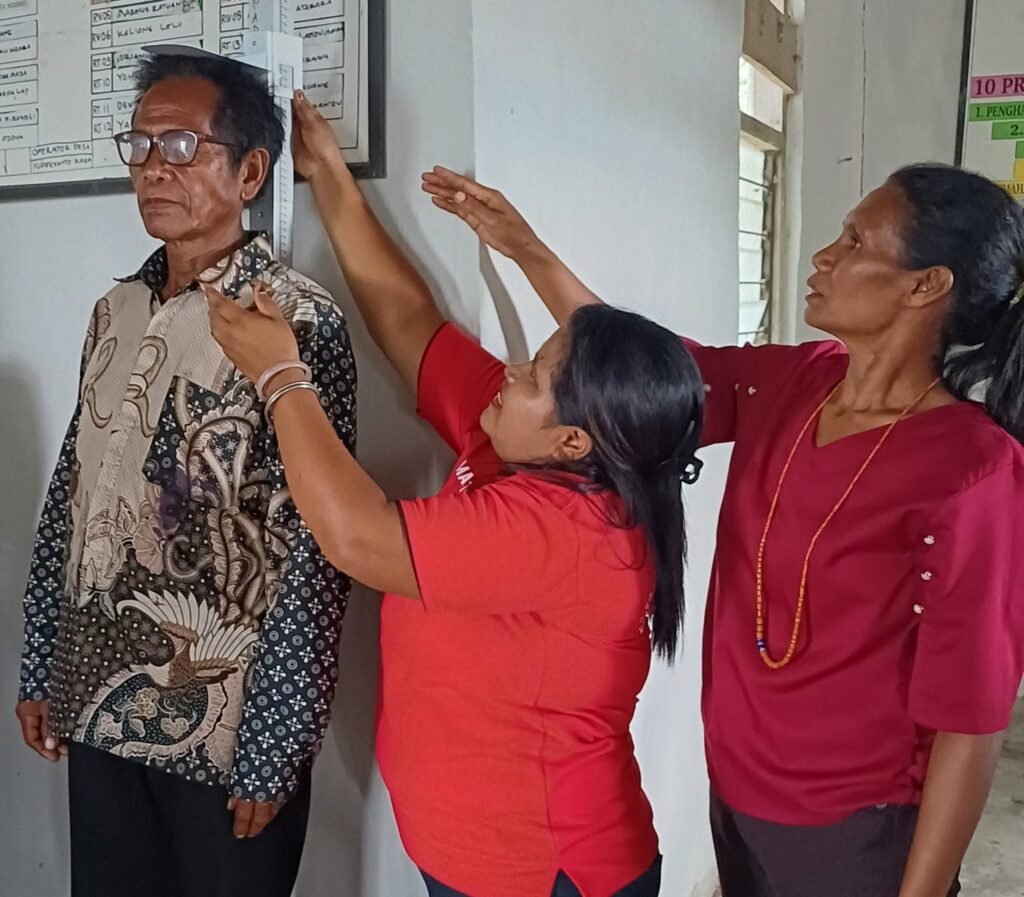
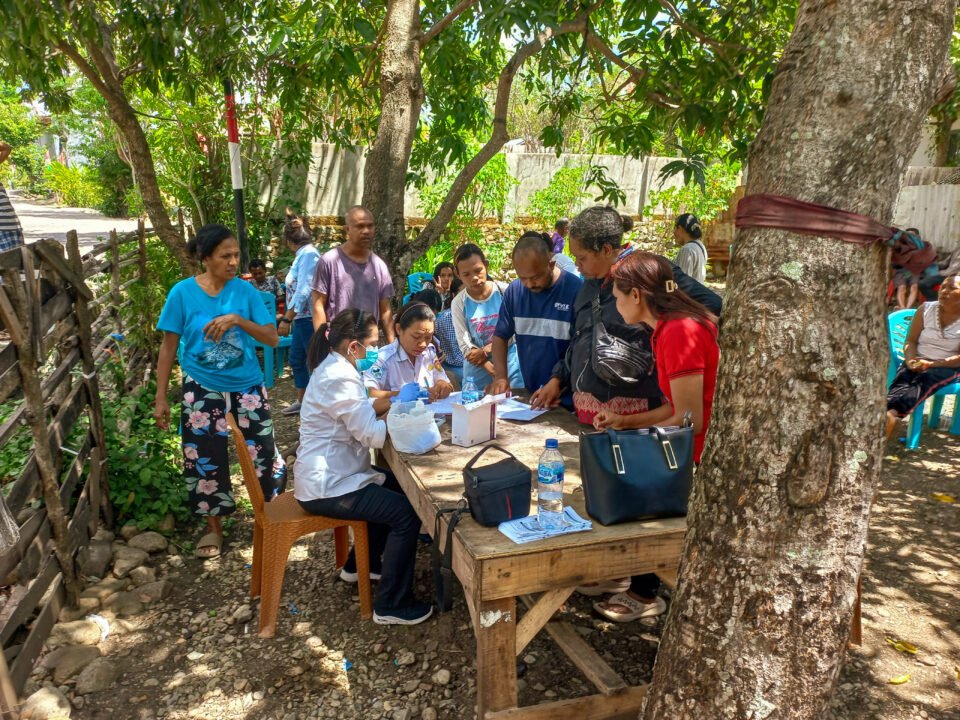
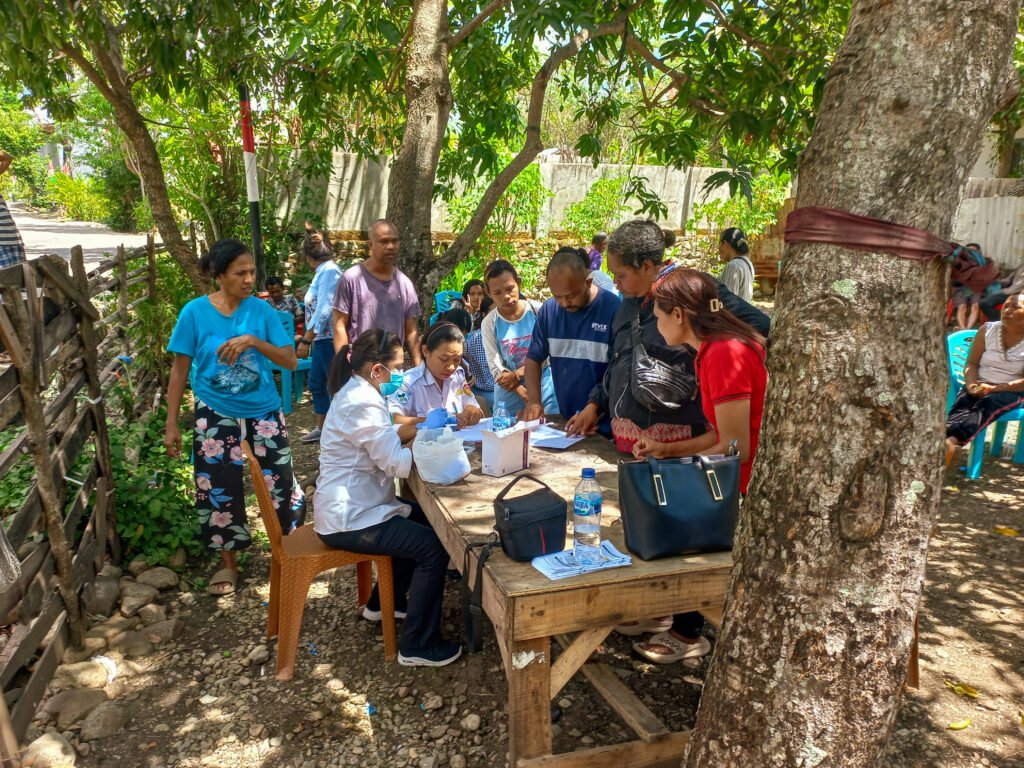
Photo of Height measurement at Posyandu services for adults and the elderly, Laihau Village, East Sumba.
Learning and Adapting Together
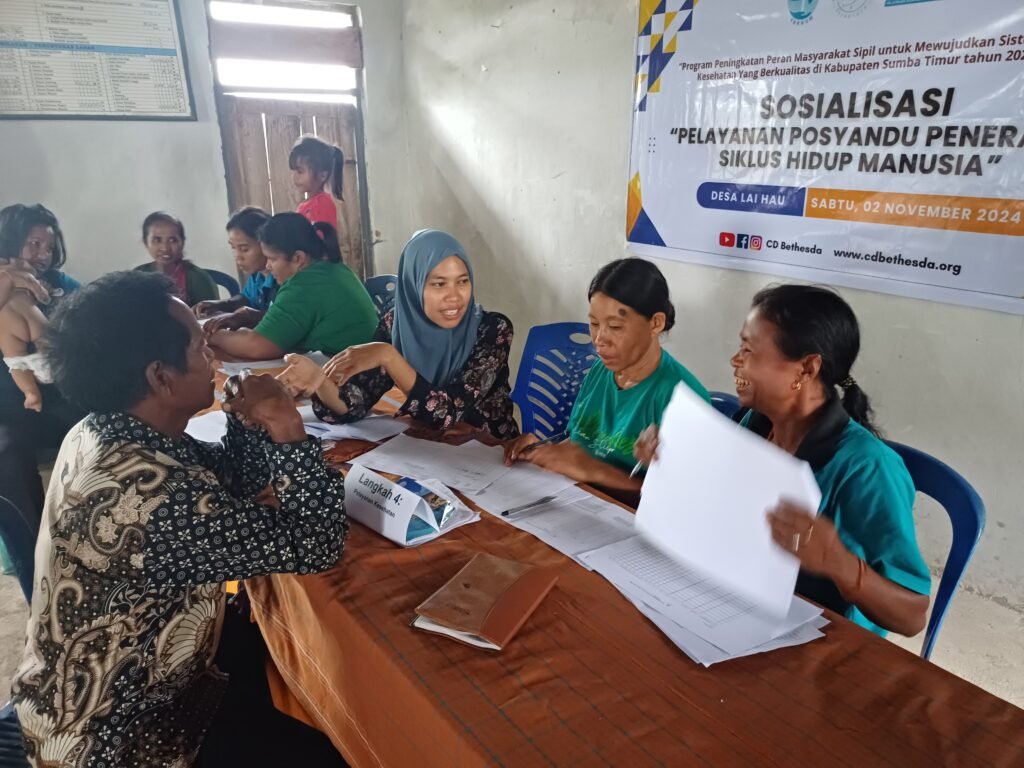
The training facilitated by CD Bethesda YAKKUM became a turning point. The cadres were introduced to the assistance card—a practical guide outlining the steps from Table 1 to Table 5, covering all age groups.
Although they initially faced some difficulties, the cadres gradually began to understand the service flow. Now, each Posyandu continues with an internal evaluation session to record challenges and find solutions together.
“We’re not perfect yet. But we keep learning, because now our responsibility is greater — to serve people through all stages of life,” said Martina with a proud smile.
New Experiences, New Skills
With the implementation of the life-cycle approach Posyandu, cadres are no longer just weighing and recording data. They are now required to master up to 25 basic skills, including providing health education, conducting simple examinations, and making referrals to health facilities.
Martina, for example, is now accustomed to providing counseling on parenting—a knowledge that used to be unfamiliar to her. In services for the elderly, she even offers advice on herbal remedies, such as boiling bay leaves to help relieve gout symptoms, while still encouraging residents to visit the health center (Puskesmas).
“Once, a female pastor felt dizzy and asked me to check her blood pressure. I didn’t know how to do it before, but after attending the training, I could. It turned out her blood pressure was low,” Martina recalled.
Building from Limitations
Martina and her fellow cadres in Laihau realize that the path toward holistic health services is not always smooth. Challenges remain: limited education, a shortage of cadres, and the fact that not all of them fully understand how to fill out the assistance cards correctly.
However, their spirit of learning and sense of togetherness have become the key. Each Posyandu has become a shared learning space—not only for the community, but also for the cadres themselves.
“We are not professional health workers, but we have the intention—and now, the knowledge as well. We will keep learning for the good of our village community,” said Martina.
Closing: Towards a More Inclusive Posyandu
What Laihau Village has accomplished may seem simple. Yet, the changes they have made mark the beginning of a small revolution in village health services. From handwritten notes on a single sheet of paper to an integrated life-cycle approach—Posyandu today is not only about children under five, but about caring for the health of all community members, from birth to old age.
With continuous support from organizations such as CD Bethesda YAKKUM, and through the spirit of cadres like Ibu Martina, the Posyandu in Laihau Village has gradually become a space of hope and learning for other villages around Lewa Tidahu Sub-district. (Elias M. Eluhana)