HIV Does Not Diminish My Dignity as a Woman
HIV may weaken one’s immune system, but it does not diminish my dignity as a woman. I have lived with HIV for 10 years and experienced the heartbreaking loss of my HIV-infected child. I went through deep trauma and gradually began to heal. A year later, I found the courage to plan another pregnancy, which resulted in the birth of a healthy, HIV-free child. My husband also tested negative for HIV. Today, I share my journey as a woman openly living with HIV to educate and empower my community. I am a proud and empowered HIV-positive woman.
This story begins in May 2013 at Sleman Regional Hospital. I will never forget the day the doctor informed me that my HIV status was reactive (positive). I was in shock and disbelief. I felt overwhelmed with guilt, as though my life was nearing its end, and I feared my husband would abandon me once he learned the truth. However, I was wrong. When I shared my HIV status with him, his reaction was completely unexpected. He accepted me wholeheartedly and supported me, regardless of my condition. He helped me seek out information about HIV, whether through the Internet or by speaking with my doctor. He also cooperated fully when the doctor recommended that both he and our son undergo HIV testing. The results brought a mix of relief and heartbreak: my husband tested negative, but our son was HIV-positive—something I had never anticipated.
After returning home from the hospital, my condition worsened, and I fell into depression. At times, I would remember things clearly, and at other times, I would forget. I even forgot how to recite Al-Fatihah; no matter how many times I tried, I couldn’t recall it. Seeing my condition, my husband reached out to a counselor at Sleman Hospital, who also happened to be a psychologist. The counselor advised that I seek emotional support from someone close to me—someone I usually confided in. Eventually, my husband told my closest aunt about my situation. Although she was initially shocked and angry, she was still willing to support me, even if only through SMS. That small gesture helped improve my condition, even if just a little.

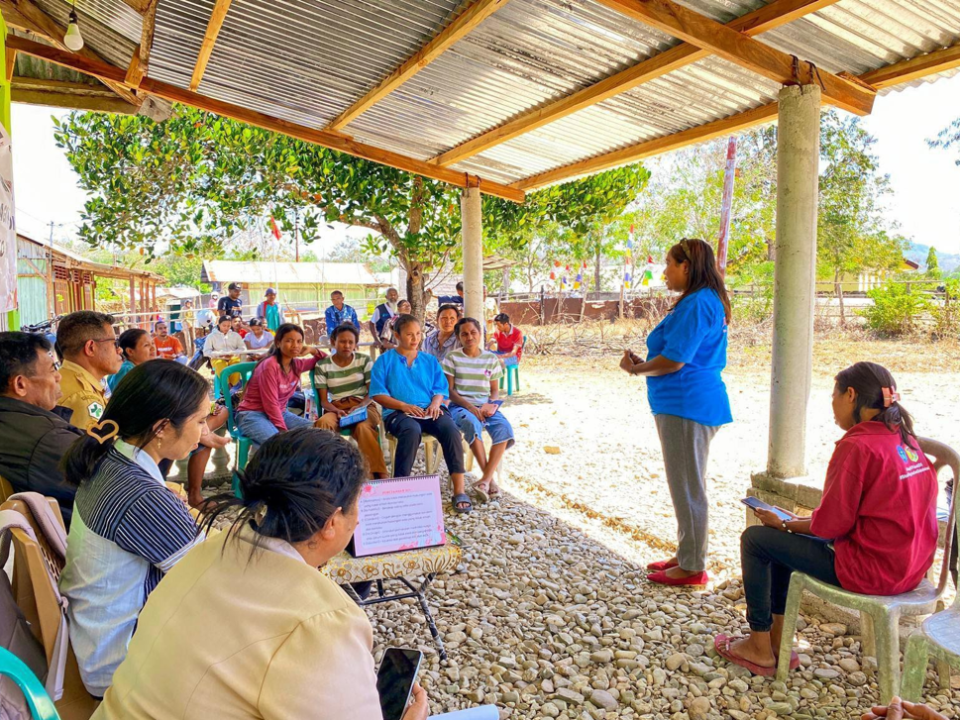
Liza Juniawati conducting HIV education for housewives
Although I received my HIV diagnosis at Sleman Regional Public Hospital, the facility was not yet equipped to provide HIV treatment. As a result, I was referred to Dr. Sardjito General Hospital. My husband accompanied me there to begin antiretroviral (ARV) treatment.
Before starting ARVs, I had to undergo a CD4 test to measure the number of white blood cells affected by the virus. My CD4 count was only 10 then, and my hemoglobin (Hb) level was 7. The doctor advised a blood transfusion, as a Hb level above 11 is required to begin ARV therapy. However, just before the transfusion, I developed a fever, and the procedure had to be postponed until my temperature returned to normal. After the transfusion, my Hb level rose to 15, and I was finally allowed to go home.
Further examinations revealed that I was also suffering from tuberculosis (TB). I was prescribed anti-tuberculosis medication, but after just a few days, I began experiencing severe nausea and vomiting. I had to return to Dr. Sardjito General Hospital for observation and evaluation. Lab tests showed elevated SGOT and SGPT levels, indicating liver stress. As a result, the TB treatment was paused for one week. My treatment was evaluated not just once but three times. After the third evaluation, the doctors concluded that I could not tolerate the red tablets, so they switched me to a fractional medication better suited for my condition.
While I was still undergoing TB treatment and recovering, tragedy struck. My son suddenly collapsed and had to be hospitalized. He was treated for 18 days, but fate had other plans. I lost my beloved son as his condition worsened. At just 2 years and 5 months old, he weighed only 6.8 kg. Opportunistic infections and co-morbidities had reached his brain. It was the most painful and devastating moment for my husband and me. Our child had been in and out of the hospital since he was 6 months old.
I fell into a deep depression. I lost all motivation and hope. For a month, I isolated myself, unwilling to speak to anyone or face the world. Then, my husband gave me a wake-up call. He reminded me, “If you keep going like this, when will you get better? What about the promise you made to our son? You said you would stay strong and fight through this.”
He encouraged me: “We can still have healthy children who are not infected with HIV—as long as you stay healthy. Come on, let’s get up and keep going. You’re not alone. I will always support you.”
His words stirred something inside me. From that moment on, I began to affirm that I must stay strong, fight, and not give up.
After two weeks of TB treatment, I began ARV therapy with the Duviral-Efavirenz regimen. Alhamdulillah, I experienced no side effects from the ARVs. Two weeks later, during an evaluation, my CD4 count had increased significantly—by 100%. I continued my treatment, committed to moving forward with strength and hope.

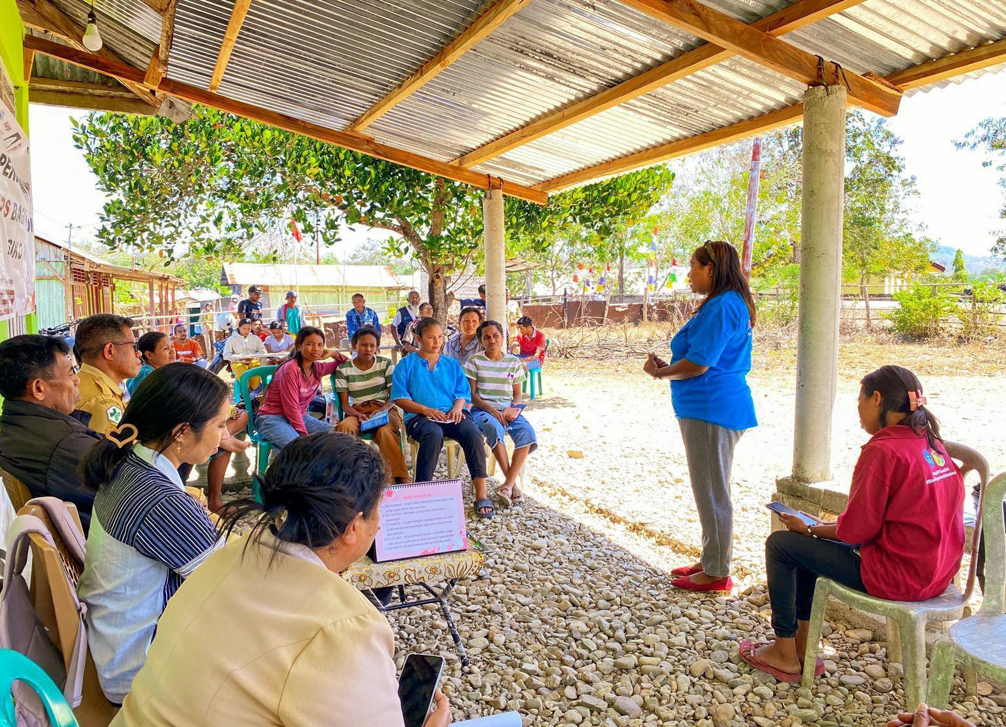
HIV education activities for students
After one year of treatment and with my CD4 count above 300, my husband and I began planning to have another child. We started by gathering accurate information about pregnancy for women living with HIV. We searched for a gynecologist experienced in managing pregnancies in HIV-positive women and were referred by a counselor at Dr. Sardjito General Hospital.
During our consultation, we came prepared with several questions: What should I do to prepare for pregnancy? How can I avoid transmitting HIV to my child and husband? What kind of delivery method is recommended? And should the baby be fed breast milk or formula once the baby is born?
The doctor explained that planning is crucial—especially ensuring that my viral load is undetectable and that there are no opportunistic infections. I underwent a viral load test, and the results returned undetectable. With this result, the doctor gave us the green light to start a pregnancy program.
I became pregnant, and thankfully, the pregnancy progressed without complications. At 36 weeks, I had another VL check to determine the safest delivery method. My viral load remained undetectable, so I was allowed to have a normal vaginal delivery.
In August 2015, my child was born healthy at Dr. Sardjito General Hospital. Because I am HIV-positive, we chose to give him formula milk instead of breastfeeding. He was also given prophylaxis to prevent HIV transmission. He underwent an Early Infant Diagnosis (EID) test at six weeks old, and the result was undetectable. He continued to grow and thrive. When he reached 24 months, we conducted an HIV antibody test, and the result was non-reactive—negative.
Knowing that both my child and my husband are HIV-negative gave me renewed strength. I proved to myself and my family that I had not transmitted the virus to them. Motivated by this, I began actively attending peer support group meetings. I gained deeper knowledge about HIV, different types of ARVs, and their side effects. I also found the courage to begin sharing my story and supporting others who had recently learned about their HIV status and were starting ARV treatment.
Later, I joined the Indonesian Positive Women’s Association and had the opportunity to participate in several national-level events. I also became a Complaint Receiving Officer (P3) for women living with HIV who had experienced gender-based violence (GBV) in the Yogyakarta area. This work introduced me to CD Bethesda, a health organization that expanded my knowledge and experience.
Through CD Bethesda, I became part of Pita Merah Jogja. They gave me space and opportunity to grow, inviting me to speak publicly and share my journey as a person living with HIV. I began talking to Empowerment and Family Welfare groups and the broader community. To my joy, many people I met accepted and embraced me.
Today, I am a woman living with HIV with an HIV-negative husband and children. I am empowered and able to support others. I believe—deeply—that HIV in my body does not diminish my dignity as a woman.
To my fellow friends who are living with HIV: Never give up. You are not alone. HIV is not the end of your world. You can still live a healthy and meaningful life. Take your ARVs consistently, and never lose hope.
(Liza Juniawati)