Synergy with BFDW Partners Towards Ending AIDS 2030
The government’s Three Zero target cannot be achieved without synergy among various stakeholders in the efforts to control HIV and AIDS. This is especially true in the aftermath of the COVID-19 pandemic, which lasted for approximately two years and presented unique challenges to achieving these targets. Civil Society Organizations are among the key contributors to HIV and AIDS control efforts, each playing a role according to their capacity. One effective strategy is to strengthen partnerships and encourage cross-sectoral participation.
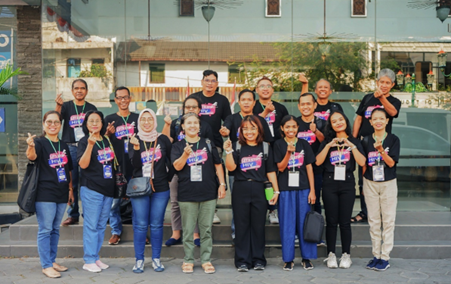
Participants of the Workshop on HIV and AIDS Control Strategies after the COVID-19 Pandemic
CD Bethesda YAKKUM, through the HIV and AIDS Integrated Control Programme in Belu Regency and Yogyakarta Municipality, focuses on policy and budget advocacy efforts and capacity building for several parties with funding from Brot Fuer Die Welt (BfdW). One of the advocacy targets implemented in this program is the need for synergy with BfdW Partner Civil Society Organisations (CSOs) to formulate a joint action plan for HIV and AIDS response programs after the COVID-19 pandemic.
To formulate a joint action plan, a Workshop on HIV and AIDS Response Strategy for BfdW Partners was held on 1-3 August 2023. The activity held at Arjuna Hotel Yogyakarta was attended by representatives of seven BfdW partner institutions from Yogyakarta, Bali, North Sumatra, East Nusa Tenggara, and West Borneo. Participants who attended the activity were BfdW Partner institutions (CD Bethesda YAKKUM, Ate Keleng Foundation, Maha Bhoga Marga Foundation, Sanggar Suara Perempuan, PKMD Bethesda Serukam, SHEEP, Yogyakarta Kebaya Foundation) and Assisted Partners (SUPER Alor, Peer Support Group Moris Foun Belu, Bener Village AIDS Care Community).
Human Immunodeficiency Virus (HIV) and Acquired Immune Deficiency Syndrome (AIDS) remain global concerns and are a priority for elimination. The Sustainable Development Goals (SDGs) address HIV and AIDS under Goal 3, ensuring healthy lives and promoting well-being for all. One of the indicators for this goal is to end the epidemics of AIDS, tuberculosis, malaria, and other communicable diseases by 2030. Targeted efforts are essential to break the chain of HIV transmission, prevent new cases, and ensure that those already infected receive appropriate treatment. This not only helps prevent AIDS-related deaths but also improves the quality of life for people living with HIV.
During the COVID-19 pandemic, HIV and AIDS programs were significantly affected. This included disruptions in the availability of antiretroviral (ARV) drugs, limited access to ARVs for people living with HIV (PLHIV), increased risk of COVID-19 transmission among PLHIV, and the reallocation of budgets originally intended for HIV and AIDS programs to address the pandemic. According to established guidelines, ARV services should ideally be provided monthly to minimize hospital visits by PLHIV during the pandemic. Similarly, access to other health services for PLHIV was regulated by health protocols to reduce the risk of COVID-19 transmission. However, ARV availability was limited due to delays in delivery caused by the closure of transportation services from supplier countries.
COVID-19 transmission is also a special concern for PLHIV because they are part of a vulnerable group due to their decreased immunity due to HIV infection. Experts say COVID-19 can cause severe complications in patients with decreased immune function, especially if PLHIV does not take ARVs regularly, which results in an increased number of viruses and low white blood cells (CD4). On the other hand, many government budgets, including those for HIV and AIDS programs, have been cut or diverted to tackle Covid-19.
Two years after the COVID-19 pandemic occurred, the Government of Indonesia announced the revocation of the policy of restrictions on community activities on 30 December 2022, as stated in the Minister of Home Affairs Instruction Number 50 and 51 of 2022. This decision was taken because Indonesia has managed to control the COVID-19 pandemic well, including maintaining its economic stability. After the revocation of the policy, it is the right time to fight for HIV prevention efforts that were hampered. Advocacy needs to continue so that the government continues to pursue policies and budgets that further support the acceleration of achieving the Three Zero target by 2030.
The Three Zero target is a policy set to eliminate new HIV cases, eliminate AIDS deaths, and eliminate stigma and discrimination against PLHIV. The Three Zero target in 2030 certainly cannot be achieved by the Health Office alone but requires cross-sectoral involvement. The policy related to cross-sectoral involvement is stated in the Minister of Health Regulation No. 23 Year 2022 on HIV, AIDS, and Sexually Transmitted Infections (STIs) Management.
One of the national strategies stipulated in the Minister of Health Regulation is the strengthening, improving, and developing partnerships and participation across sectors, the private sector, community organisations/communities, and communities and relevant stakeholders. The Workshop on HIV and AIDS Response Strategy for BfdW Partners, carried out by CD Bethesda YAKKUM, hopes to be one of the activities that can contribute to increasing cross-sectoral participation in HIV and AIDS response in Indonesia.
There are three objectives of the workshop, among others, to provide participants with an understanding of HIV and AIDS response strategies and policies after the COVID-19 pandemic; to provide participants with an understanding of HIV and AIDS response strategies in the context of synergy and collaboration with the government; to provide participants with a sense of the lessons learnt from the community-based HIV and AIDS response programme conducted in Yogyakarta City and Belu District; and formulate HIV and AIDS response strategies to accelerate the achievement of the Three Zero target in 2030.
The workshop began with an opening ceremony that included an introduction to the event by the Director of CD Bethesda YAKKUM and opening remarks by the Deputy Mayor of Yogyakarta, who also serves as the Chair of the Yogyakarta Municipality AIDS Commission. In his introduction, Wahyu Priyo Saptono, S.Pd., M.PD., the Director of CD Bethesda YAKKUM, outlined the workshop's objectives and provided an overview of the three-day agenda. The workshop will also feature firsthand experiences from partners involved in HIV programs implemented by CD Bethesda YAKKUM. Additionally, BfdW partners will share their respective regions' initiatives, hoping to develop a collaborative strategy for HIV and AIDS prevention.
The remarks of the Deputy Mayor of Yogyakarta were delivered by M. Agus Priyanto, SKM, M. Kes., Head of Health Resources at the Yogyakarta Municipality Health Office. After reading the Deputy Mayor’s remarks, Agus Priyanto provided an overview of the current HIV and AIDS response in Yogyakarta Municipality. The local government continues to allocate funding for healthcare services for PLHIV, particularly for municipality residents. Additionally, strong synergy has been established between the HIV program and the Violence Against Women and Children program, allowing better support for PLHIV who have experienced violence. Many health centres have also introduced innovations in HIV services to improve accessibility. In the post-COVID-19 period, most health centres have optimized previously limited services due to the pandemic.
The second day of the workshop began with a presentation by two speakers from the Indonesian Ministry of Health and the Kerti Praja Foundation. Dr. Endang Lukitosari, MPH, from the Indonesian Ministry of Health, delivered the first presentation, titled Strategies and Policies for HIV and AIDS Response after the COVID-19 Pandemic. In her presentation, she discussed the state of the HIV and AIDS response following the COVID-19 pandemic. Since 2010, the trend of new HIV infections has been declining, and it is projected to continue decreasing until 2030. However, the highest increase in cases has been observed among men who have sex with men (MSM) and non-key female populations, particularly housewives. Globally, the highest number of new HIV cases is found in Africa and sub-Saharan regions, where the spread tends to occur more among non-key populations, including clients of sex workers and the sex workers themselves. In Southeast Asia, the majority of new HIV cases are among MSM and sex workers. In Indonesia, HIV cases are predominantly concentrated in densely populated areas. The general pattern of transmission is most prevalent among MSM, female sex workers, and other high-risk groups. An exception is found in Papua, where HIV transmission is more common among the general population.
Although the number of new HIV cases in Indonesia has decreased, it is not matched by the AIDS mortality rate, which is still increasing. Indonesia's 2020-2024 National Medium Term Development Plan strategy focuses on maternal and infant mortality, immunisation and stunting. Meanwhile, the HIV response strategy still refers to the global commitment, namely Three Zero in 2030. The approach implemented is to detect vulnerable and key populations for HIV testing, treat them immediately, maintain treatment, and suppress the virus with viral load testing. HIV control strategies require the involvement of all parties due to financial commitments, the need for qualified human resources, and increased access to services to make them more accessible to vulnerable populations.
The second presentation, titled HIV and AIDS Response Strategy – Synergy and Collaboration with the Government, was delivered by Dr Ni Luh Putu Ari Astuti from the Kerti Praja Foundation. In her presentation, she shared the Foundation’s experience in providing services to PLHIV and key populations, including their strategies for collaboration with the government. The Kerti Praja Foundation applies a primary health care (PHC) approach, offering integrated one-stop services to ensure that key populations receive comprehensive care in a single location. Their programs extend beyond HIV services, encompassing broader public health initiatives.
The basis of Kerti Praja Foundation's activities are research, clinics and public health programmes. Some programmes are implemented with funding from the Global Fund for priority intervention areas. One of the programmes currently being developed is the Ministry of Health's community-based screening to increase the coverage of key populations testing for HIV with Oral Fluid Tests. The clinic at Kerti Praja Foundation is designed for key populations so they can access the health services they need with ease, convenience and non-discrimination.
The following workshop process was a sharing session on Good Learning of Community-Based HIV and AIDS Control Programmes conducted in Yogyakarta City and Belu District with three resource persons from Yayasan Kebaya Yogyakarta, Peer Support Group of Moris Foun Belu East Nusa Tenggara and AIDS Care Community of Bener Village Yogyakarta City. Rully Mallay delivered the first material from Yayasan Kebaya Yogyakarta, who delivered an overview of the institution in general, priority issues, activities carried out with BfdW funding and synergies with CD Bethesda YAKKUM and other CSOs in Yogyakarta Municipality.
The Kebaya Yogyakarta programs address various issues, including environmental concerns, disasters, reproductive health, gender, HIV, and support for the elderly. Their activities include mentoring, regular meetings through the Violet Peer Support Group, credit unions, community cooperatives, documentary filmmaking, participation in partnership activities, and worship services for non-Muslim members. Exceptional support from CD Bethesda YAKKUM has included strengthening organizational capacity, assisting with health advocacy and civil documentation, and providing training in massage therapy, herbal medicine, local food processing, and shelter-based education. After a period of collaboration with CD Bethesda YAKKUM, Yayasan Kebaya Yogyakarta successfully secured direct funding from BfdW. Despite this progress, the organization continues to face significant challenges, including bureaucratic hurdles, persistent stigma, stereotypical discrimination, and gender-based violence.
Budi Kusuma Pello delivered the second sharing material from Moris Foun Belu, who conveyed the activities. The goal of the peer support group is to motivate PLHIV to comply with treatment and empower them to be independent without depending on others. Some of the activities carried out by Moris Foun Belu are advocating for the fundamental rights of PLHIV to policymakers, training to build self-confidence and open status, conducting testimonials to students, home visits and advocating with legislators and executives to fight for health services. One of the advocacies carried out is a dialogue with the Vice Regent and Chairman of the Regional Legislative Council and a joint press release to convey information and increase public awareness.
Natalia Indriyati delivered the third presentation, representing the AIDS Care Community of Bener. She shared about the AIDS Care Community’s efforts in HIV and AIDS prevention. The primary focus of WPA’s activities is community education; however, direct assistance for PLHIV has not yet been explicitly provided. In the early stages, the AIDS Care Community received training on HIV and AIDS, public speaking, and interpersonal communication, which equipped them to educate the public effectively. AIDS Care Community of Bener conducted awareness sessions for Empowerment and Family Welfare cadres and community leaders to enhance their understanding of HIV and AIDS. The community also benefited from skills training in soap making, massage therapy, herbal medicine, and waste management. Despite these efforts, funding for HIV and AIDS programs remains limited. One key factor in successful advocacy for budget support has been the close relationship with the Village head.
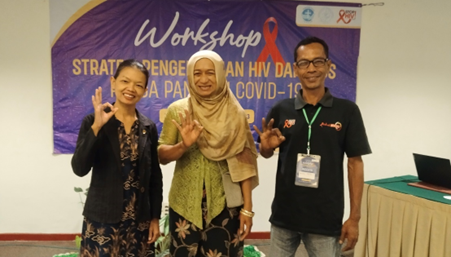
The Speakers Sharing Good Learning from Community-Based HIV and AIDS Control Programmes